Terpene Effects Chart

Terpenes: What You Feel Starts Here

THC and CBD get the headlines, but terpenes do the behind-the-scenes work that shapes how cannabis actually feels. These aromatic compounds influence everything from mood to focus to physical comfort. That burst of energy from a citrusy strain? Likely limonene. That mellow, couch-ready calm? Probably myrcene or linalool. Terpenes help explain why two strains with the same cannabinoid content can hit in completely different ways.

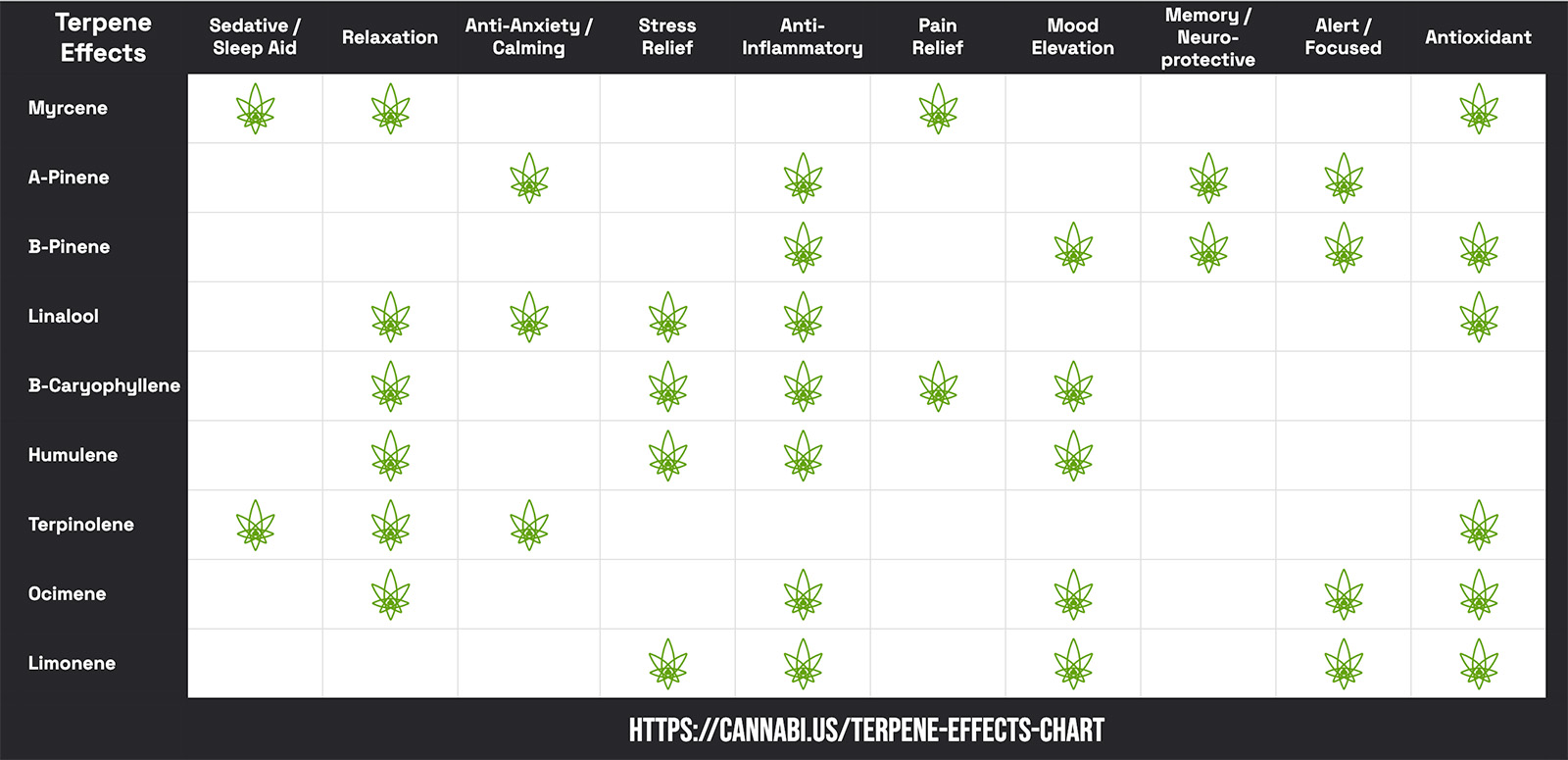
The chart below breaks down some of the most common cannabis terpenes—and what current research suggests they may help with. Use it as a starting point to figure out which terpenes match your needs, whether you're looking to relax, focus, or just feel better in your body.
See the effects of terpenes in this chart

A Closer Look at the Terpenes

Now that you’ve seen how each terpene may affect your mind and body, here’s a deeper look at what the research says. Each terpene brings something different to the table—some calm the nervous system, others support focus, mood, or physical relief. The descriptions below break down the science and offer a sense of what you might feel when using cannabis that’s rich in each one.
In short: if you’re dealing with pain, stress, or insomnia, a myrcene-heavy strain might leave you feeling comfortably numb, calm, and ready for sleep. But it’s best saved for downtime—not your to-do list.

If you're using cannabis that’s high in β-myrcene, you can expect a mix of calming, body-focused effects. Research consistently shows that β-myrcene has sedative and muscle-relaxing properties, which may lead to a sense of deep physical relaxation or "couch-lock" in higher doses. Users often describe feeling sleepy, mellow, or pain-free—especially when β-myrcene is paired with THC.

Studies in rats show β-myrcene can reduce joint pain and inflammation, and it may enhance the effects of cannabinoids by increasing their transport across the blood-brain barrier. Human testing also suggests that it may impair motor skills and attention, pointing to a strong central nervous system depressant effect—so it’s not ideal if you need to stay alert or focused.

While it doesn't bind directly to cannabinoid receptors (CB1 or CB2), its impact on other targets like TRPV1 (involved in pain sensing) helps explain why it may amplify the pain relief people experience from cannabis.

Scientific research sources: 1, 2, 3, 4, 5 
In short: when using a strain high in α-pinene, people often report feeling clear-headed, less anxious, and more focused—with the added benefit of potential respiratory support and anti-inflammatory effects. It's well-suited for those seeking relief from stress or discomfort while staying productive.

If you're using cannabis high in α-pinene, you can expect to feel mentally clear, alert, and possibly more focused—in contrast to the fogginess that THC sometimes causes. Multiple studies highlight α-pinene's neuroprotective and anti-inflammatory effects, and some evidence suggests it may help counteract memory impairment by inhibiting acetylcholinesterase, the enzyme that breaks down acetylcholine (a key neurotransmitter for learning and memory).

α-Pinene has also been shown to have mild anti-anxiety effects and can reduce inflammation and pain in the body. It may bring a subtle sense of calm clarity without sedation, making it a terpene that could be useful during the day, especially if you're looking for mental sharpness without stimulation.

Scientific research sources: 1, 2, 3, 4, 5

If you’re using cannabis high in β-pinene, you might notice a feeling of mental alertness paired with a subtle calmness, thanks to its reported anti-inflammatory and neuroprotective effects. While less studied than its alpha counterpart, β-pinene has shown promise in early research for supporting brain health, particularly through acetylcholinesterase inhibition—which could help preserve memory and cognition.

You might also feel a light uplift in mood or energy, as β-pinene has demonstrated antioxidant and anti-inflammatory effects that could reduce overall physical and mental fatigue. In animal studies, it's helped lower blood sugar and cholesterol, which may not translate to immediate feelings, but suggests potential benefits for people managing metabolic stress.

There’s also evidence it has mild antimicrobial effects, which won't affect how you feel directly, but supports its traditional use in herbal medicine. And in preclinical models of Alzheimer’s, β-pinene helped reduce neuroinflammation and oxidative stress—suggesting that its effects might go beyond surface-level and into long-term brain support.

So, expect something high in β-pinene to lean clear-headed, calm, and possibly mentally sharpened—a good choice for staying present and focused without feeling overstimulated or sedated.
Scientific research sources: 1, 2, 3, 4, 5
If you’re using cannabis that’s high in linalool, expect to feel deeply relaxed, mentally calm, and physically at ease. Multiple studies point to linalool’s anxiolytic, antidepressant-like, and sedative properties, which may contribute to a sense of emotional relief and reduced tension—both mentally and physically.

Research shows that linalool may boost serotonin and norepinephrine activity, helping to regulate mood and reduce symptoms of anxiety and depression. It also has anti-inflammatory and antioxidant effects, which may subtly ease pain and physical discomfort.

What really sets linalool apart is its neuroprotective potential—shown in preclinical models of Alzheimer’s disease to reduce oxidative stress and brain inflammation. That doesn’t translate directly to a feeling you’ll notice immediately, but it suggests possible long-term brain support.

In short, high-linalool cannabis may make you feel less anxious, more emotionally balanced, and ready for rest. It’s a great option when you need to unwind, fall asleep, or reduce overstimulation—especially after a stressful day or in social settings where you tend to feel on edge.

Scientific research sources: 1, 2, 3, 4, 5

If you’re using cannabis high in β-caryophyllene, you’re likely to feel steady, grounded, and physically soothed—without the mental fog or heavy sedation that sometimes comes with other terpenes.

Research shows that β-caryophyllene is unique among terpenes because it acts directly on the CB2 cannabinoid receptor, which is tied to immune function and inflammation, rather than psychoactivity. This gives it anti-inflammatory and pain-relieving effects without making you feel high or impaired.

It’s also shown promise in wound healing, neuroprotection, and reducing anxiety, with studies suggesting that it could help ease stress, calm nerves, and support mood stability. Its interaction with CB2 and other targets like PPARs means it may help regulate chronic inflammation and even support metabolic health.

So if you're turning to something high in β-caryophyllene, expect to feel a deep sense of physical relief, reduced tension, and emotional balance. It's a terpene that helps the body feel better from the inside out—especially useful for chronic discomfort, stress, or any situation where you want to feel calm but stay fully clear-headed.

Scientific research sources: 1, 2, 3, 4, 5

If you’re using cannabis high in α-humulene, you’re likely to feel light, clear, and possibly less physically tense, without strong sedation or mental cloudiness. This terpene is often associated with subtle physical relaxation and anti-inflammatory effects—not the heavy body load you might get from something like myrcene.

Studies show α-humulene can reduce inflammation, fight bacteria, and even help regulate abnormal cell growth—which means it's doing serious behind-the-scenes work, even if you don’t immediately feel it. One study also suggests it can support apoptosis (cell cleanup) in liver cancer models, indicating broader internal benefits.

There's also evidence that α-humulene may modulate cannabinoid effects, subtly amplifying the benefits of THC or CBD without increasing the psychoactive intensity. It interacts with similar brain pathways as cannabinoids, producing effects that researchers call “cannabimimetic,” even though it doesn’t bind to CB1 or CB2 receptors directly.

So practically speaking, cannabis high in α-humulene might make you feel mildly uplifted, a bit sharper, and physically less inflamed. It’s a good fit for daytime use or for people who want therapeutic effects (like anti-inflammatory support or immune modulation) without the drowsy or disorienting feeling that other terpenes might bring.

Scientific research sources: 1, 2, 3, 4, 5

Cannabis high in terpinolene tends to produce a light, slightly dreamy effect that can vary depending on what cannabinoids it’s paired with. While not as common as other terpenes, terpinolene is gaining interest because of its sedative, antioxidant, and mild anti-inflammatory properties.

Inhalation studies in mice show that terpinolene can have a notable calming effect, reducing movement and promoting stillness—suggesting it may help with restlessness or difficulty falling asleep. That said, it doesn’t bring a heavy, body-numbing sensation. Instead, it leans toward a mild mental fog or floaty calm, which could feel pleasant or spacey depending on the setting.

It’s also been studied for its antibacterial, antioxidant, and even antitumor effects, and is noted to contribute to the “entourage effect” in cannabis—meaning it may subtly modify how cannabinoids like THC or CBD feel when consumed together.

In practical terms, someone using terpinolene-rich cannabis might feel relaxed, slightly sedated, or a bit withdrawn—great for winding down, but not ideal if you’re aiming to stay sharply focused. Think of it as a gentle mental and physical unwind, especially useful in the evening or during quiet downtime.

Scientific research sources: 1, 2, 3, 4, 5

Cannabis high in ocimene tends to produce a clear, energetic, and refreshing effect, often described as uplifting without overstimulation. Unlike more sedating terpenes, ocimene leans toward a feeling of lightness and mental alertness, making it a good option for daytime use or social settings.

Research highlights ocimene’s antioxidant, anti-inflammatory, antifungal, and antibacterial activity, which means that while the terpene itself isn’t psychoactive, it may help reduce inflammatory discomfort or contribute to respiratory ease—a bonus if you’re managing congestion or minor immune irritation.

Ocimene is also known for its floral, sweet, and slightly herbaceous aroma, which often accompanies strains that feel more bright and mood-lifting. Though studies show it plays an important ecological role in plant defense and pollination, in humans it may subtly contribute to a feeling of well-being, mental clarity, and physical lightness.

So if you’re choosing a cannabis product high in ocimene, expect a smooth, invigorating vibe—a gentle mental boost without the edginess of strong sativa profiles, and just enough relaxation to keep things easy but not sleepy.

Scientific research sources: 1, 2, 3, 4, 5

Cannabis high in limonene is often associated with a bright, mood-lifting experience—the kind of effect that feels like mental sunshine. Across multiple studies, limonene shows anti-anxiety, antidepressant, and calming effects, which may help you feel more upbeat, focused, and emotionally steady without sedation.

Animal studies show that limonene interacts with brain systems tied to dopamine and GABA, both crucial in regulating mood and stress response. One study specifically found it acts via adenosine A2A receptors, a known target in mood and anxiety regulation. So if you’re feeling mentally tense or emotionally low, limonene-rich strains might gently reset your nervous system without knocking you out.

On the physical side, limonene also has anti-inflammatory, antioxidant, and immune-modulating properties. While these may not create a specific sensation, they could contribute to feeling more at ease physically, especially if you deal with chronic tension or mild inflammatory discomfort.

In short, cannabis with a lot of limonene often makes people feel clean, calm, and emotionally uplifted—like your system just took a breath of fresh citrus air. It’s a great choice for stressful mornings, social outings, or any moment when you need a clear head and a lighter heart.

Scientific research sources: 1, 2, 3, 4, 5

CANNABIS. UNDERSTOOD.
Disclaimer: Cannabius does not provide medical advice. All information is for educational purposes only and should not be relied upon for diagnosing or treating any health condition. Cannabis products are intended for use only by adults of legal age in their jurisdiction. Always consult a qualified healthcare provider before using cannabis.
© 2026 Cannabi.us | All Rights Reserved | Made with 💜, 🤖 & 🥦 in SFL
chevron-down